Navigation

Showing posts with label SHARE. Show all posts

Friday, September 30, 2016

SHARE's Shelter Board presents the Harvest Auction October 8.

SHARE's Shelter Board has asked us to share this information:


The Shelter Board
presents the
14th Annual Harvest Auction
and Dinner

Saturday, October 8
Doors open at 3:30pm

Mountaineers Club
7700 Sand Point Way NE, Seattle

Ed Mast as MC
Special Guest Speakers
Entertainment by Seattle SeaChordsmen

Buffet Dinner provided by Pyramid Catering

To register

For more information
Benefitting

Friday, April 1, 2016

SHARE's troubles, redux

SHARE has established Tent City 6 around the King County Administration Building, in protest of King County's decision not to fund encampments (although they did establish a contract with Bill Kirlin-Hackett to "find hosts" for Tent City 4 in early 2015), as well as not to fund organizations that have anything to do with encampments.

Details are on SHARE's website.

I stopped by there early this afternoon to talk to the people there. There were 2 people sitting at a table (the "front desk"), and they seemed to know what was going on. Evidently things are going well so far. There are some funders who are concerned, and who may assist SHARE in covering its debts.

SHARE's information packet included letters from King County and from the City of Seattle, as well as details about SHARE's current financial situation.

This seems a typical SHARE solution -- a highly visible political protest about political decisions.

About Tents

It occurred to me that King County's objection to tents as shelter is well answered by Judge Thomas J Mahon's statements to the City of Seattle in 2002, during the lawsuit Seattle filed against El Centro de la Raza and SHARE: "Tents are a well-established form of shelter, with a long and distinguished track record extending back at least 4000 years."

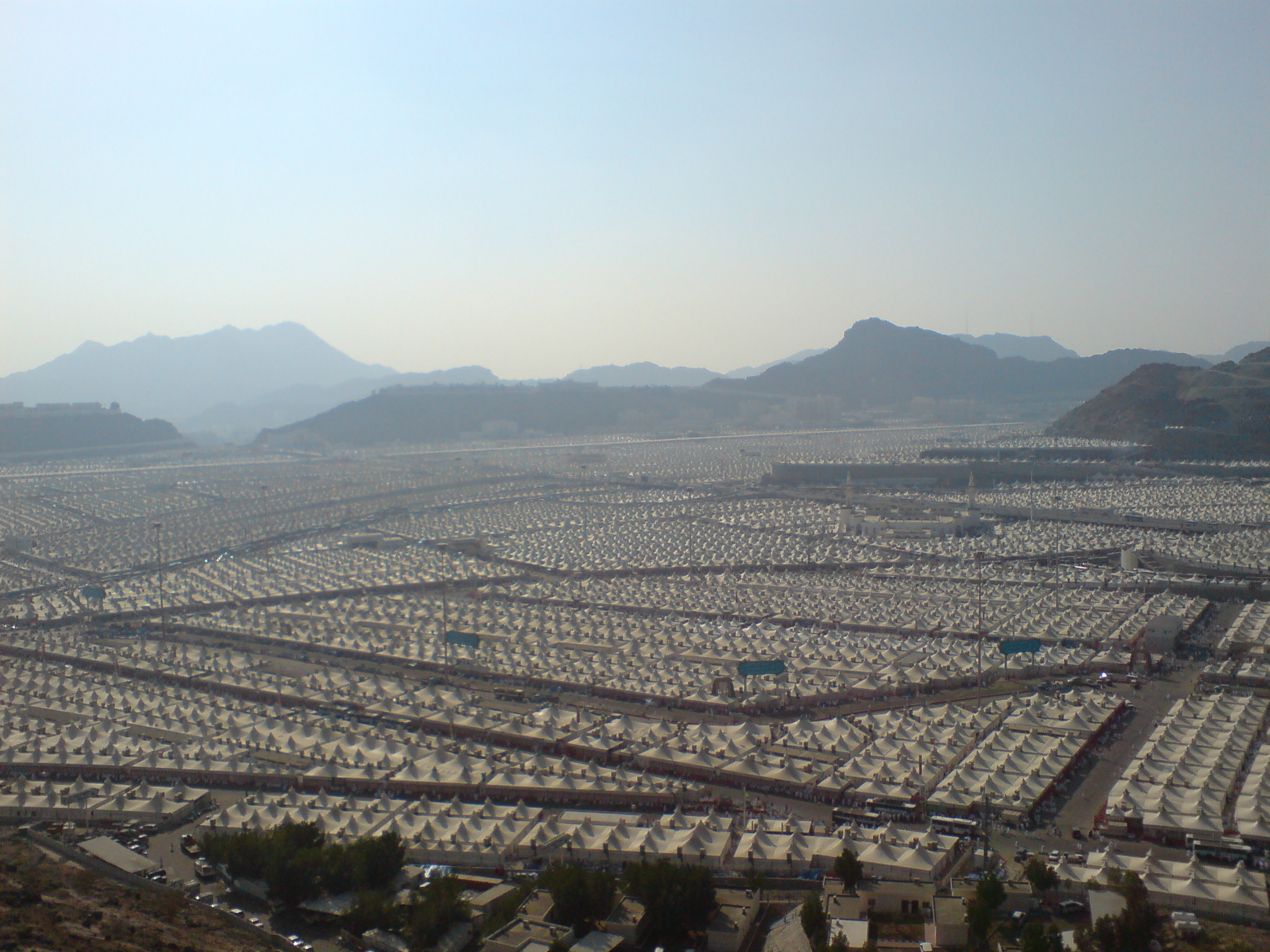
Tents are still used as primary shelter in many parts of the world:

Afhganistan

Now, that's a tent city.  Photo by Mubeen Rahman.
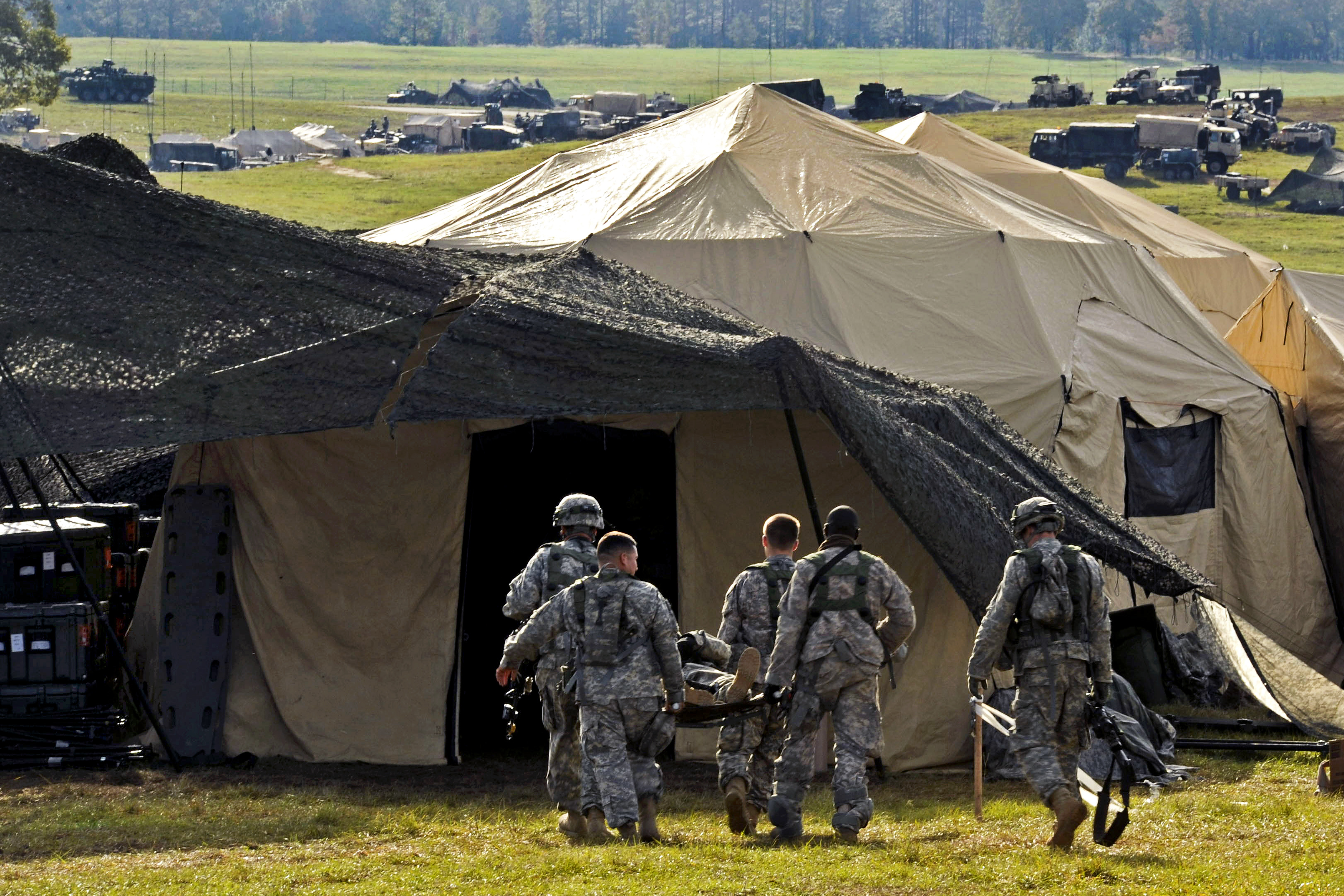
And still used by the United States Armed Forces:
Photo by the U.S. Army

As I stated in my last post on this matter, I think King County is clearly in the wrong on this matter.

That said, I agree that Encampments -- Tent Cities -- are not any kind of a solution to homelessness. What they are is a solution for survival while the residents gather resources to re-enter housing. That is their purpose in this time of a crisis in homelessness.

So, what about SHARE?

Many people say that SHARE has mismanaged what money it has. And that's possible. Yet, we can add the numbers, and we can discover that SHARE is correct: they have not been paid for all the things they have done, and they cannot continue to operate in the red. They need some permanent funding sources to the extent of about $10k a month. The spend about $150k on both Tent City 3 and Tent City 4, and they spend about $40k on Tent City 5 (not all costs are covered by the City).

The encampments are paid for entirely by donations. The encampments are necessary for people to survive. Their choices are simple: sleep in the open, or sleep in an encampment. Which is the better choice?

Given the reality of homelessness, what should be our response?

Tuesday, March 22, 2016

SHARE's troubles

SHARE is having financial troubles again.

From sharewheel.org:
... although we have been working on this to get more funding our efforts have fallen on deaf ears. ...

Unfortunately, we have reached the point when we can no longer AFFORD TO STAY OPEN, literally. To date we have $70K in unpaid bills, our staff has been withholding their salaries, and we don’t have enough bus tickets to last thru the end of the month.

The Central Committee has MSP’d to have the last night be on March 30th, hopefully we’ll have enough bus tickets to last us until then. On March 31st we will be marching to the King County Administration Building Plaza and staying there until such a time that we can negotiate the needed funding in order to reopen our shelters. We hope many of you will join us because this is the only way we will be successful.

We have faced similar crisis in the past and by staying together we have managed to prevail. For over the 25 years we have had many victories through direct action. These we achieved by staying together and UNITED. Our strength is in our numbers. NOW is the time to show our strength as a COMMUNITY.
Further on in their website, they comment on the reason given for refusal of funding by King County:
SHARE has been hobbled with debt the past two years. We’ve still managed to keep people safe and alive. Now though, through funding cuts and general increases in operating costs, we can’t promise we will be able to keep going much longer.We simply can’t function without more stable funding.   In spite of this King County rejected our two funding proposal requests without consideration in late February. In one case, the reason for denial was because “King County does not consider Tent Cities to be shelters.”
Tell a backpacker, "a tent isn't shelter," and he'll laugh at you.
We must demand that King County follow their own emergency plan, and fund SHARE. King County says they follow the “All Home” Plan (to end Homelessness) but they don’t.  That Plan is clear – existing shelters like SHARE’s should be preserved, not bankrupted.
King County is incorrect about tent cities, and a judge in 2002 commented on this. Tents have a long and well-established track record as emergency shelter. They've been around for thousands of years, and they still work.

That's not the real reason, though. That's the "ostensible" reason, and since it's clearly false, there must be another -- unstated -- reason. We know that the Human Services people of both King County and Seattle act as though they utterly despise SHARE.

I agree that tent cities are not a solution to homelessness. They are not. You will not get any staffer at SHARE to agree that tent cities are a solution for homelessness. Tent cities are an interim survival mechanism -- as are all other homeless shelters. That's all they are. And an "interim solution," it seems to me, should be as cheap as possible, on the very grounds that it's not a permanent solution. We should be spending our money on permanent solutions, not on temporary ones, if we can at all avoid it.

Tent cities are one of the cheapest forms of shelter available. Even at $90k a year for 100 people, this is $2.50 per day per person. Tent cities don't have bedbugs (unlike the indoor shelters, which have them in profusion).  Yes, they are minimalist in terms of shelter. But there are reasons why many people use them. See my post on why people refuse shelter.

Tent cities are very visible reminders of homelessness.

And then there's this: if SHARE disappears by going bankrupt, will the Tent Cities disappear?

NO, they will NOT disappear. The tent cities of SHARE can operate without SHARE, and will if they need to.

Friday, March 18, 2016

What happened at Nickelsville?

News of "Occupy Camp Dearborn"

We knew what was going to happen as soon as we heard the news. The Dearborn location of Nickelsville decided to fire Scott Morrow (he was their staff person) and go their own way.

I should probably begin last year in 2015, when about the same thing happened. This is documented in the SLOG, the Stranger's blog. In early 2015, Nickelsville fired Scott. Steve Olsen, the pastor of Good Shepherd Lutheran Church, warned them that if they did not reinstate Scott Morrow, they would face eviction. In 2015, they did so. Within a few weeks, the people who ramrodded that eviction were barred from Nickelsville.

So when the Dearborn site of Nickelsville did the same thing again, we expected it to go about the same way it did last time. There was a difference this time, though. The residents stuck to their decision. So, on February 20, when they were supposed to leave, and they hadn't found a spot, they didn't leave.

Olsen told the Nickelsville residents that he has "great confidence in the Nickelsville model of self-government." However, the church had understood that "when we contracted with Nickelsville was that Mr. Morrow, as staff, would be our chief liaison and communication link. ... If that is not to be the case, we will no longer be able to serve as church host for the Dearborn site."

Now, I have to question this decision. Was the Nickelsville model of self-government only okay as long as Scott Morrow was in charge of it? But be that as it may (and I only ask the question because there are accusations that Scott Morrow manipulates pastors into doing things like this), Nickelsville did not reinstate Scott, even after being threatened with eviction.

So, on March 11, 2016, Nickelsville was swept by the police. We cannot deny that the residents had plenty of notice.

Real Change News carried the story: (quotes from their website; please go read the whole story)
Polly Trout, founder of the social services nonprofit Patacara, stepped into the fray in February with the intention of becoming the new sponsor.
....
Sixteen former Dearborn residents were spread between hotel rooms and activists’ homes until afternoon on March 14 when they moved into the open lot in Africatown. It’s unclear how long they can stay there, and Patacara is actively looking for a more permanent location, Trout said. 
 But there's a problem.

Ms. Trout and Camp Dearborn have chosen a lower-barrier encampment model.
“Our mission is to offer compassionate, respectful services that meet people where they’re at,” Trout said. “We’re making sure everyone at the camp has case management and is getting on the coordinated entry waitlist for housing and connecting them to other services if they need it.”
Nickelsville cofounder Peggy Hotes says the low-barrier approach is not sustainable. In her words,  “when you’re drunk or high it’s impossible to make rational decisions, including decisions on moderating the intake of substances.”

Nickelsville has never had a really good reputation for making sure residents stayed clean and sober. When they were founded, they ran themselves as "anti-SHARE," and allowed open drinking and open drug use. When that didn't work out (it took them a week to figure that out), they decided that drinking and using in camp was not okay, but being drunk or intoxicated in camp was okay as long as they person stayed in their tent (or went right to bed) and didn't bother anybody.

The camp still has this attitude, sorry to say. Nickelsville has had a reputation as a camp for druggies for quite some time, and nothing that has happened in the last few years has done much to change that reputation.

Occupy Camp Dearborn has set up a facebook page.

According to the Stranger's SLOG, some Camp Dearborn residents have found a temporary campsite at the Umoja P.E.A.C.E. Center in the Central District. The writer of that article says, "the city faces constant neighborhood freakouts over opening even highly regulated tent encampments." This is very true. Imagine the freakout that will happen over a low-barrier "compassionate" encampment.

That's not to say that something doesn't need to be done for them, but a self-managed encampment is probably not the right answer. As Ms. Hotes says, it's really hard for someone under the influence to make good decisions.